
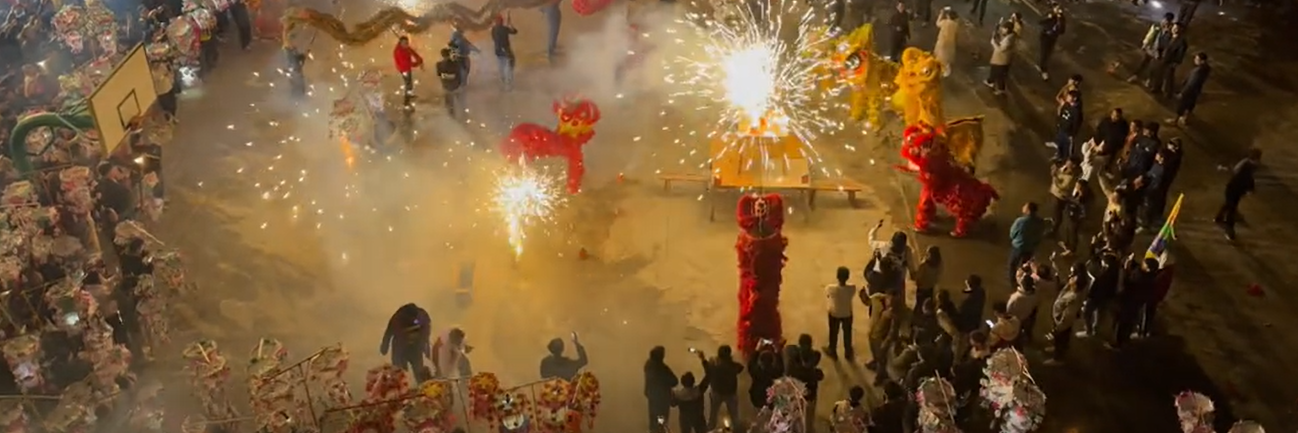
When people search for Chinese intangible cultural heritage, traditional Chinese folk festivals, or authentic rural customs in China, most results focus on famous UNESCO-listed traditions or large city events.
But in Western Guangdong, there is a powerful village-based celebration that brings together multiple forms of Chinese folk culture, ritual performance, traditional opera, martial heritage, and communal feasting.
It is called Nianli (年例).
Although the word “Nianli” may not appear in most English guidebooks, Unlike commercialized holiday events, Nianli remains a living example of how Chinese folk religion, performance art, and communal dining traditions coexist in modern rural society.
If you want to experience real grassroots China — beyond staged tourist shows — Nianli offers a rare window into community-centered cultural heritage.
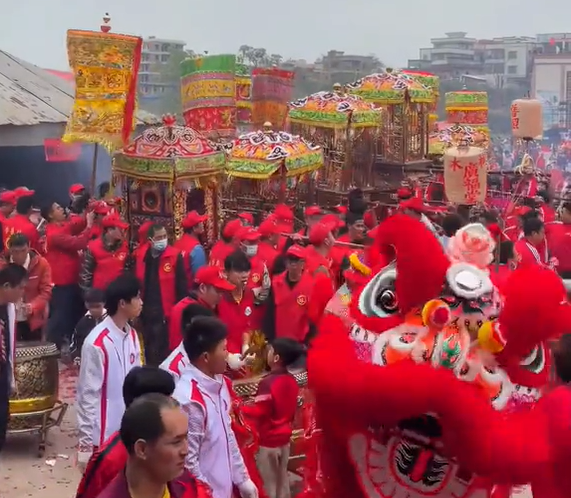
What Is Nianli? A Traditional Chinese Village Folk Festival
Nianli (年例) is an annual village festival widely celebrated in parts of Western Guangdong Maoming and Zhanjiang.
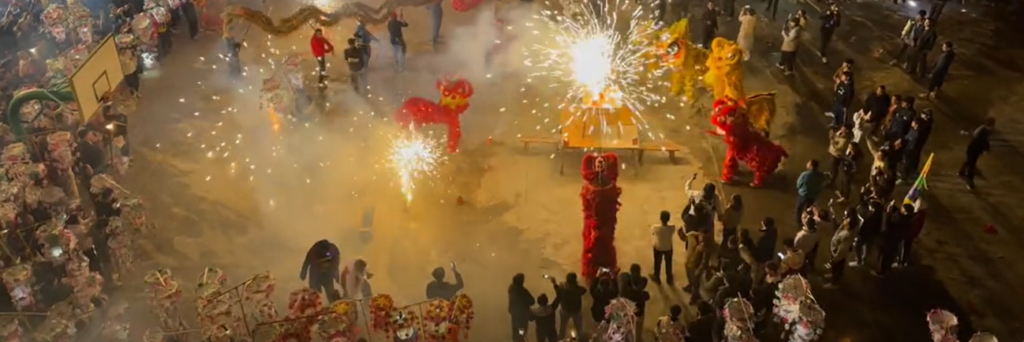
The date differs from village to village. But each village has its own fixed Nianli date, the chosen lunar calendar date remains the same every year for that specific village.
Unlike national holidays, Nianli is organized village by village, making it one of the most authentic forms of local Chinese folk customs.
For visitors, Nianli is remarkable because it combines:
- Chinese intangible cultural heritage performances
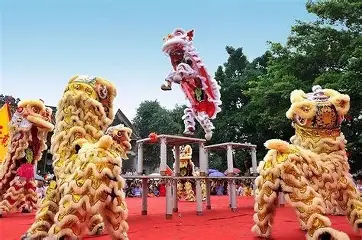
- Traditional lion dances
- Folk deity processions
- Ritual theater and opera
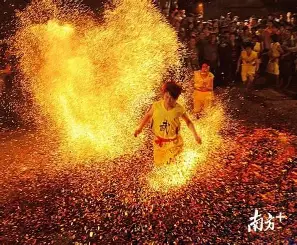
- Fire-related ceremonial practices
- Large-scale banquets
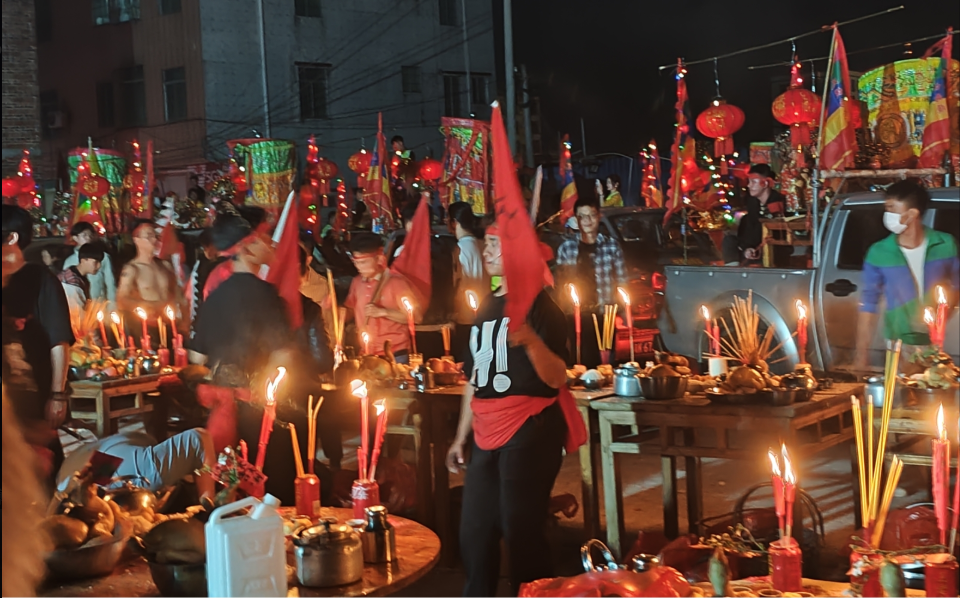
Many villages preserve specific forms of Chinese intangible cultural heritage, such as:
- Yingxiong Eagle Dance
- Walking through fire rituals
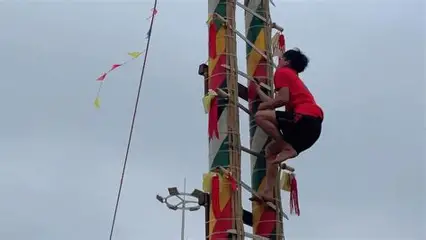
- Piercing ceremonies
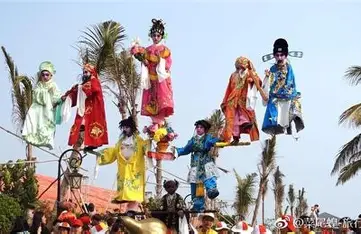
- Piaose
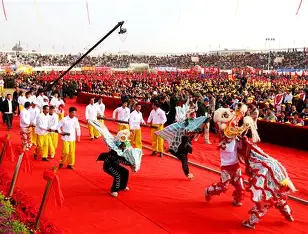
Distinctive nianli Features of Different Villages
| Nianli | Date | Features |
|---|---|---|
| Gaozhou Zhongping Society Nianli | 21st day of 1st lunar month | Centered on flower boat parade and 10,000‑person torch ritual. Known as the “Top Flower Boat in Western Guangdong”. The 2025 flower boat was over 10 meters long and weighed 2,000 jin. About 12,000 torches sold yearly, attracting nearly 100,000 participants. One of Maoming’s Top 10 Folk Nianli. |
| Gaozhou Sidaren (Sidayuan) Nianli | Unfixed, decided by traditional divination | Joint flower boat parade by four village temples. Flower boat competition is the highlight, drawing nearly 10,000 spectators each year. Located in Shatian Town, Gaozhou, and listed among Maoming’s Top 10 Folk Nianli. |
| Aotou Feima Nianli | 25th–28th day of 1st lunar month (main on 28th) | Focuses on martial arts and lion dances, with the classic “Lion Crossing the Mountain”. Shows the heritage of “Hometown of Martial Arts”. Includes lion king contests and married women returning to their parents’ home. |
| Xinyi Liushuang Lantern Nianli | 17th day of 1st lunar month | Main activity: bamboo lantern parade. White lanterns pray for boys; red lanterns pray for girls. Xinyi bamboo weaving is an intangible cultural heritage. A representative of lantern culture in western Guangdong. |
| Gaozhou Changpo Wangli Village Nianli | 13th day of 1st lunar month | Torch ceremony around the temple, with torches creating sparks. Core tradition: torch worship for blessing and exorcism, preserving ancient Lingnan customs. |
| Dianbai Diancheng Zhuangchun Festival | 14th day of 1st lunar month | Children dress as historical figures on parade floats, similar to “Piao Se” float art. Also called “Zou Gong”. A typical character‑parade intangible cultural heritage in western Guangdong. |
| Maonan Shi’aotang (Shi’ao Tang) General Parade Nianli | 15th day of 1st lunar month | Dozens of men paint their faces as generals, holding torches to bless every household. Symbolizes driving away evil and bringing fortune. Includes ancestor worship and Nuo dance, preserving ancient Baiyue culture. |
| Gaozhou Nanhu Tang Nianli | 17th day of 2nd lunar month | Famous for its grand scale: over 1,000 banquet tables, 10,000 guests. Night parades require traffic control on downtown roads. Known as the “Luxury Village Nianli”, showing Maoming people’s hospitality. |
These performances are not staged for tourism—they are part of living belief systems and communal identity.
It is loud, colorful, and immersive — not curated for tourists, but preserved through community tradition.
If you are researching Chinese folk activities, rural Chinese festivals, or traditional Guangdong culture, Nianli is an important example.
Evening Banquets: A Unique Chinese Village Feast Tradition
One of the highlights of Nianli is the evening banquet.However, it works differently from public festivals.
The feast is organized household by household:
- Each family hosts its own dinner.
- Menus vary slightly between homes.
- A typical banquet includes more than ten dishes.
- Relatives and invited friends attend specific households.
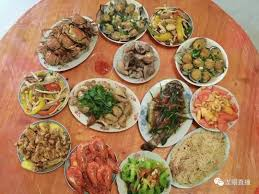
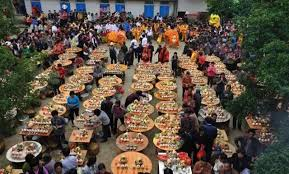
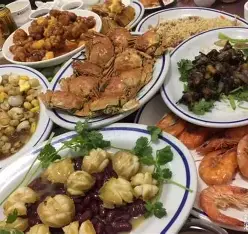
Many people say it’s a free lunch, and that’s true—but there’s a difference.Families usually arrange seating based on confirmed table numbers. If you arrive without prior notice, most villagers will still be polite and welcoming — but it may create awkwardness.
To avoid discomfort:
- Ask beforehand.
- Ideally attend with a local friend.
Hospitality is strong, but cultural etiquette matters.
Gaozhou Nianli: A Detailed Example of Chinese Folk Ritual Practice
To better understand how Nianli reflects traditional Chinese folk religion and village ritual structure, let’s look at Gaozhou Nianli
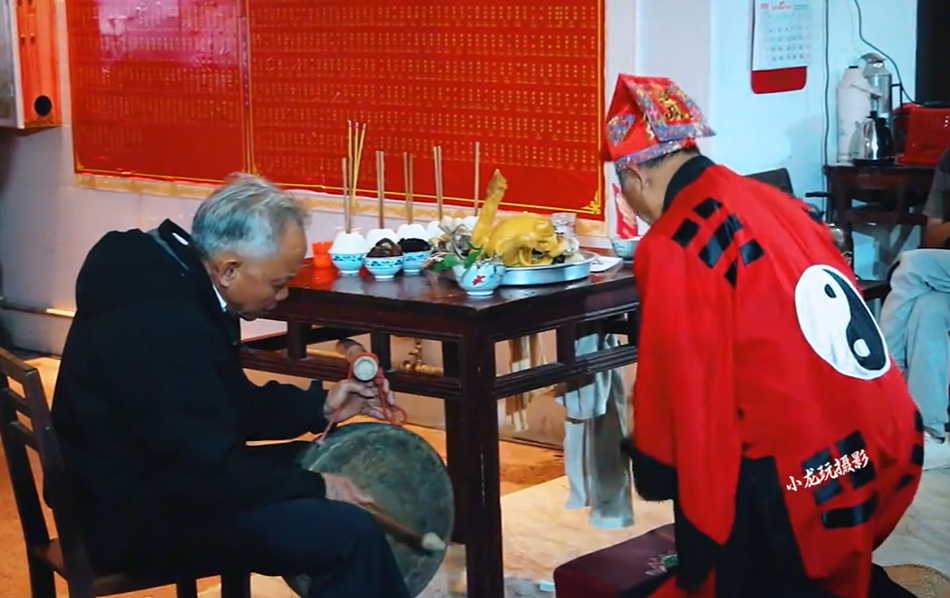
Early Morning: Opening the Temple
- Daoist priests open the temple gates.
- A ritual is performed to invite the gods.
- Amulets are affixed to the corners of every household’s walls to ward off evil spirits and ensure peace and safety.
- Families prepare offerings.
- Firecrackers are set off.
This stage emphasizes spiritual
Daytime: Grand Deity Procession
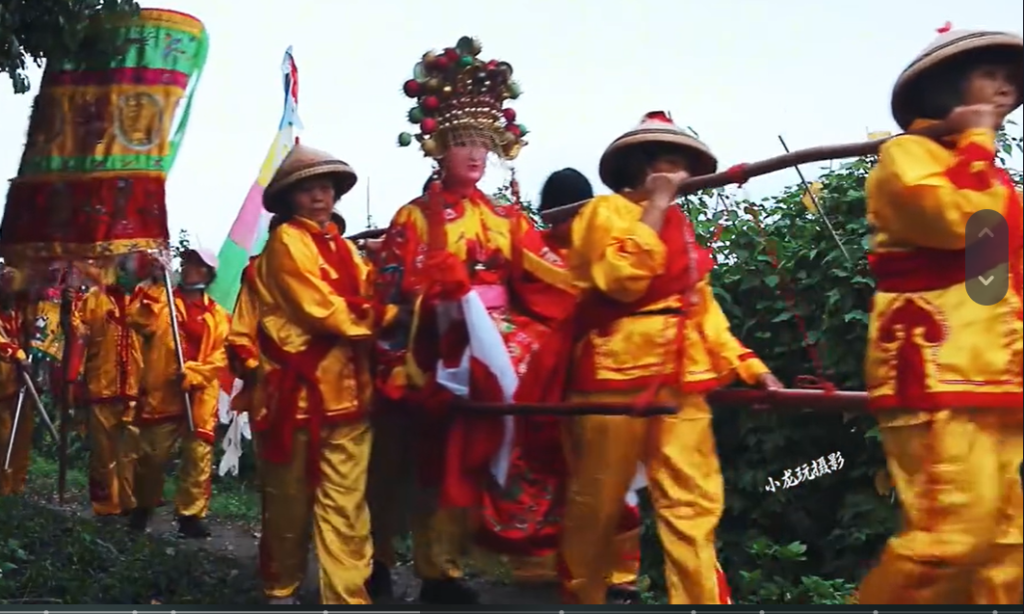
The procession is spectacular and deeply rooted in southern Chinese folk tradition.
You may see:
- High lanterns
- Decorated drums
- Flower boats
- Suona and long horns
- Five-colored battle flags
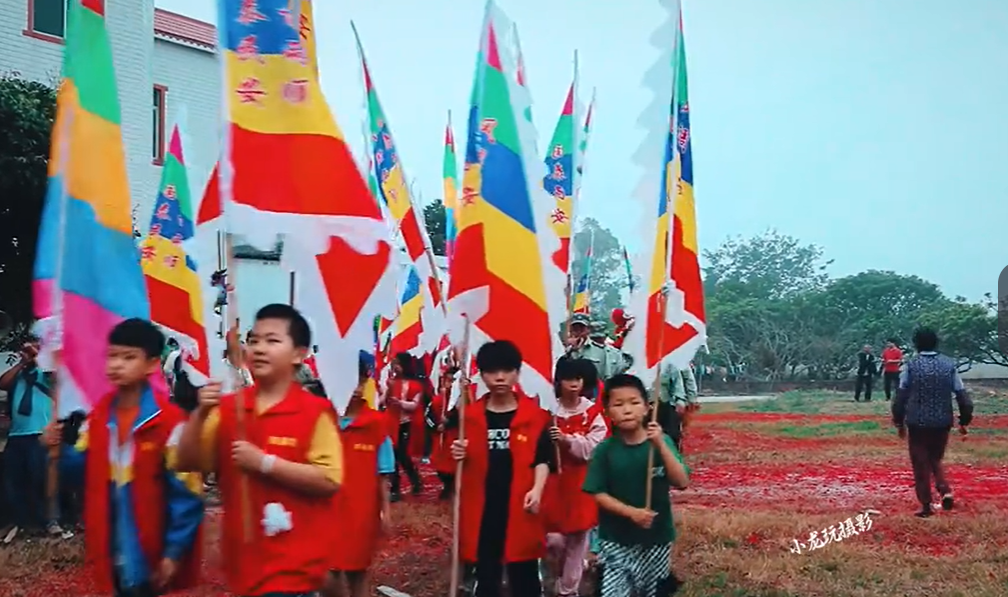
The Five-Colored War Flags are especially symbolic. They are associated with Xian Lady, a revered historical figure in Lingnan history. The five colors represent the Five Elements and symbolize protection, balance, and victory.These flags embody local belief systems embedded within the Nianli tradition.
Evening: Celebration and Ritual Closure
After the banquets:
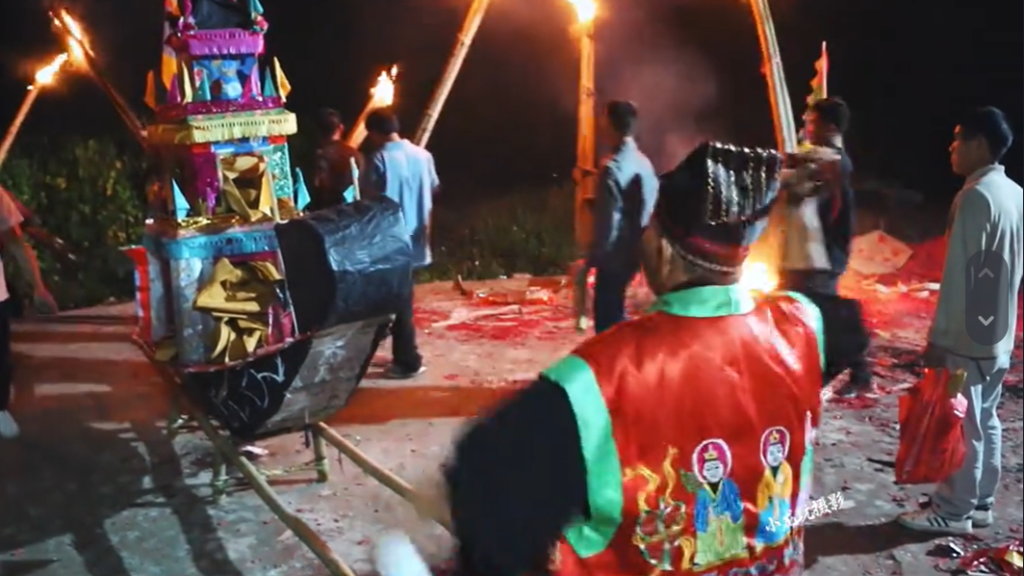
- Torch processions may take place.
- Opera troupes perform.
- Drums and gongs continue into the night.
Later, the procession returns to the temple for a closing ritual.
A symbolic “sealing the boat” ceremony is performed:
- Evil spirits are symbolically sent away.
- A paper boat may be burned.
- The temple gates are closed.
Where Did Nianli Come From?
There are several theories:
- It preserves traditions of the ancient Gao–Liang cultural region.
- It commemorates the inspection tours of Lady Xian, where locals welcomed her.
- It evolved from agricultural thanksgiving rituals.
Like many living traditions in China, its origin blends history, legend, and collective memory.
How to Experience Nianli
Unlike commercial festivals, Nianli is not packaged for tourism. There are no official ticket platforms or tour groups.But that doesn’t mean you can’t experience it.
Here are three realistic ways to join:
1️⃣ Ask a Friend from Western Guangdong
The easiest and most comfortable way is simple: Ask a friend from Maoming or Zhanjiang to take you.
Because each village has a fixed annual date (based on the lunar calendar), locals always know when their village celebrates Nianli. If you go with a local:
- You’ll know the correct time
- You’ll join the right household for dinner
- You’ll avoid awkward misunderstandings
This is the smoothest option.
2️⃣ Ask Online — People Are Hospitable
Another surprisingly effective way is to ask online.
You can post in Chinese social media groups or community forums and say:
“I’m interested in experiencing Nianli in Western Guangdong. Would anyone be willing to invite me?”“
People in this region are known for being extremely hospitable. If someone sees your message, there’s a good chance they will invite you.
Nianli is about community pride — many villagers are happy to share their tradition with respectful visitors.
3️⃣ Go Directly — But Do It the Right Way
You can also go independently.
Nianli season usually starts about one week after Lunar New Year. Celebrations increase during this period. Larger villages typically have more spectacular performances. These are public and open to everyone.
If You Want to Join the Banquet. This is where etiquette becomes important.
Do not walk directly to a random house and ask to eat. People won’t reject you, but if they didn’t prepare an extra seat, it can create awkwardness.
Instead:
- Ask villagers at the entrance of the village
- Ask someone at a crossroads
- Politely explain that you’d like to experience Nianli
Hospitality in Western Guangdong is strong. Most people genuinely won’t mind. But approaching it respectfully makes everything smoother.
Overall Atmosphere: Absolutely Worth Experiencing
Nianli is noisy.
It is crowded.
It is full of drums, smoke, firecrackers, laughter, and food.
If you are looking for authentic Chinese folk culture and intangible cultural heritage in its natural setting, Nianli is absolutely worth experiencing.
And if you need help understanding regional traditions, timing your visit, or planning immersive travel in China — feel free to contact us.
We’re here to help you explore the China most visitors never see.