
Whether you are a professional singer preparing for a performance, a teacher leading six hours of classes, or a corporate professional navigating back-to-back Zoom calls, your voice is your most valuable tool. Yet, in our high-pressure, climate-controlled environments, we often neglect the delicate tissues of our throat until they feel dry, scratchy, or strained.
Instead of reaching for harsh synthetic options, many are turning back to the ancient wisdom of “Medicine and Food Homology.” This philosophy suggests that the best way to maintain health is to nourish-to-resolve. One of the most beloved rituals for this is a warm cup of throat coat tea. But what makes this herbal blend so effective, and why has Traditional Medicinals Throat Coat tea become the gold standard for vocalists and wellness enthusiasts alike?
Product Spotlight: Traditional Medicinals Throat Coat Tea
If you are looking for purity and potency, Traditional Medicinals Throat Coat tea is the industry leader. Their commitment to pharmacopoeial grade herbs ensures that every cup delivers the active compounds your body needs to harmonize and soothe.
Shop Traditional Medicinals Throat Coat Tea on Amazon
Why We Love It:
- Pure Ingredients: Non-GMO Project Verified and USDA Organic.
- Caffeine-Free: Does throat coat tea have caffeine? No, it is a naturally caffeine-free herbal blend, making it perfect for a soothing evening ritual.
- Complex Flavor: A sweet, earthy, and silky taste that feels like a warm hug for your throat.
What is in throat coat tea
At the heart of almost every Traditional Medicinals Throat Coat Tea is a singular, powerhouse ingredient: licorice root. While many people associate “licorice” only with candy, the raw licorice root (Glycyrrhiza glabra) has been used for centuries in Traditional Chinese and European herbalism to harmonize the body and soothe the respiratory tract.
What is Licorice Root?
If you’ve ever wondered what is licorice made of, it is the root of a legume plant. In a herbal context, licorice root benefits come from its unique “demulcent” properties. This means it creates a thin, protective film of mucilage over the mucous membranes.
Why It’s the Star Ingredient
Traditional medicinals throat coat tea uses high-quality, organic licorice root to provide that signature “slippery” feeling. This isn’t just a texture; it is the herb’s way of providing a “liquid bandage” to condition and balance the throat’s delicate lining. When you ask, “What does throat coat tea do?”, the answer lies in this ability to coat and moisturize the areas that feel most fatigued.
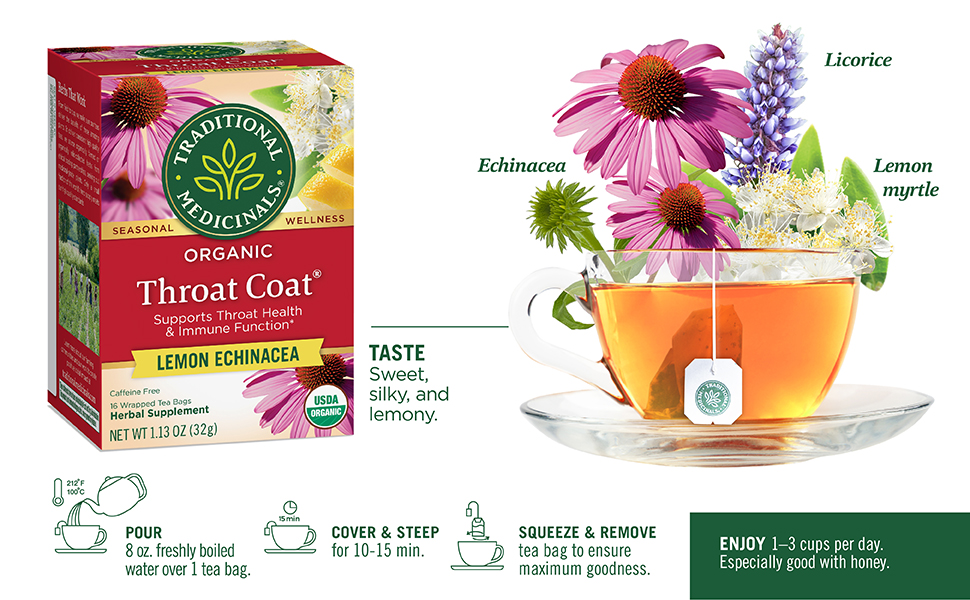
Beyond licorice, the synergy of throat coat tea ingredients is what makes the blend so effective. Most high-quality blends, like the organic throat coat tea from Traditional Medicinals, include:
- Slippery Elm Bark: Another powerful demulcent that works alongside licorice to soothe and nourish.
- Marshmallow Root: Known for its high mucilage content to help condition the throat.
- Wild Cherry Bark: Often included to support a calm and open respiratory system.
- Echinacea: Some variations, like the throat coat tea with echinacea or lemon echinacea throat coat tea, include this herb to enhance and support the immune system.
Does Throat Coat Tea Work? Scenes from a Busy Life
The beauty of this tea is its versatility. It fits perfectly into the modern “on-the-go” lifestyle while offering a moment of slow, intentional care.
- The Home Office: Keep throat coat tea bags by your kettle. Sipping throughout a day of virtual meetings helps balance the strain of constant speaking.
- The Traveler: Dry airplane air is the enemy of a healthy throat. Tucking a few bags of Traditional Medicinals into your carry-on ensures you can nourish your system as soon as you land.
- The Performer: There is a reason throat coat tea for singers is a backstage staple. It provides immediate vocal comfort without the use of numbing agents that can lead to over-straining.
Is This Tea Right for You?
While is licorice good for you is generally a “yes” for most people, herbalism is about finding the right fit for your unique constitution.
Who It’s For:
- Speakers, teachers, and singers.
- Those living in dry or polluted urban environments.
- Anyone looking to support their throat during seasonal changes.
Who Should Be Cautious:
Regarding throat coat tea side effects, the primary concern is the licorice root. Long-term, high-volume consumption of licorice can affect potassium levels and blood pressure.
- Pregnancy/Breastfeeding: You might wonder, “Is throat coat tea safe for pregnancy?” or “Can I drink throat coat tea while breastfeeding?” While generally considered gentle, licorice can affect hormone levels. Always consult your healthcare practitioner before use during these times.
- Hypertension: If you have high blood pressure, the licorice content may not be suitable for daily use.
FAQ: Your Questions Answered
Is throat coat tea good for acid reflux?
While some find the demulcent properties of licorice root and marshmallow root soothing for the esophagus, others find that certain herbal blends can relax the lower esophageal sphincter. It is best to try a small amount to see how your body responds.
Does throat coat tea have caffeine?
No. This is a 100% throat coat herbal tea blend. It is naturally caffeine-free, so it won’t interfere with your sleep or contribute to dehydration.
What is licorice root good for?
It’s commonly used to support throat comfort, digestion, and as a natural sweet alternative.
1 thought on “Traditional Medicinals Throat Coat Tea”